Versus guide
Ranked, divisions
and every mode
E-Day runs two ranking systems at once, and most people only notice one of them. Here is how they actually work, followed by the rules for every Versus mode — quoted from the game's own text rather than paraphrased.
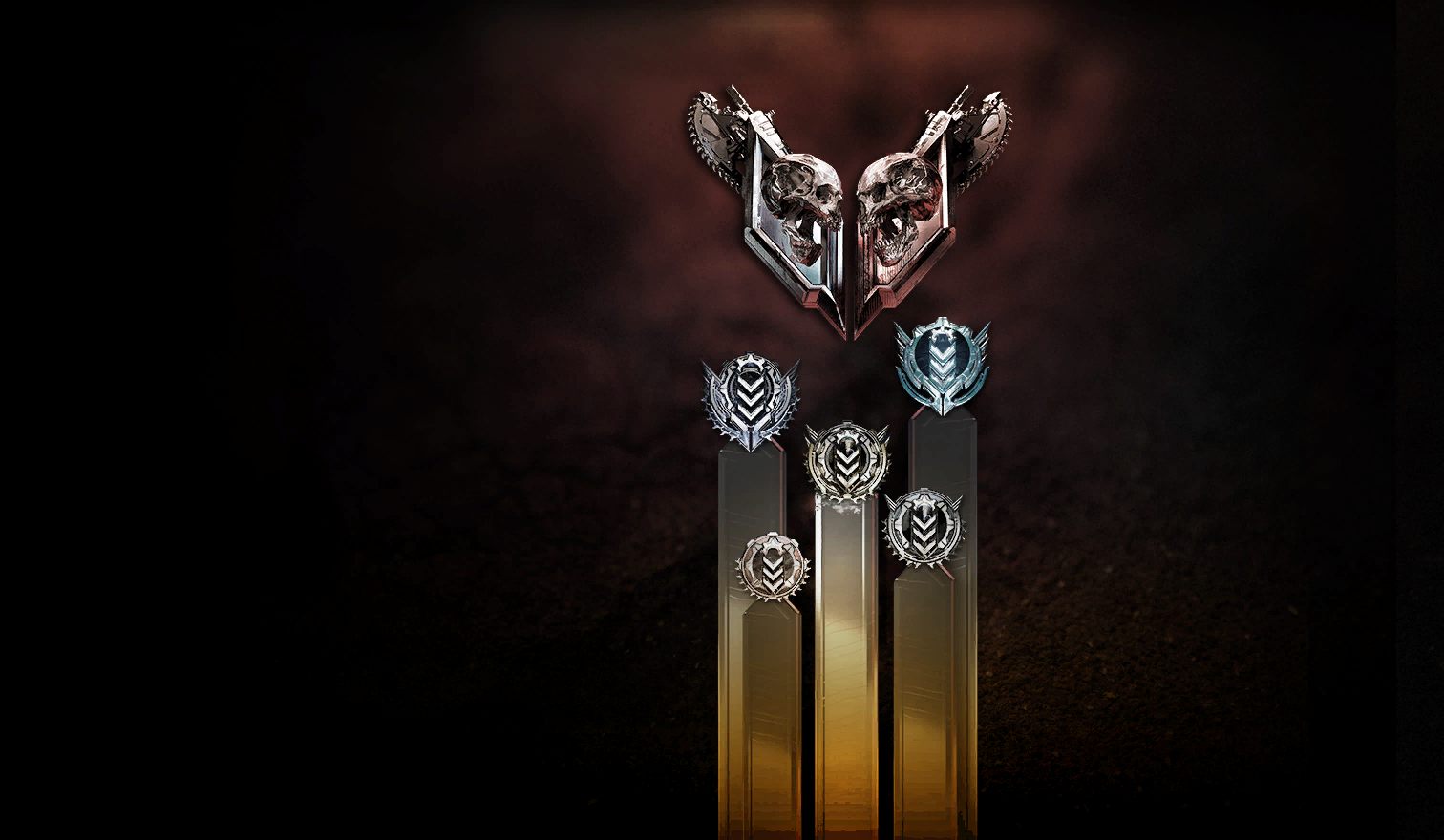
Two systems, not one
Ranked assigns you two separate things after your placement matches, and they do different jobs. Confusing them is the single most common mistake people make when they talk about their rank.
- A hidden skill rating, which puts you in a Skill Division. This is what matchmaking uses. You never see the number.
- A visible Rank Rating (RR), which sets your Rank — the Bronze to Diamond badge on your card. Matchmaking ignores it completely.
"Ranked is built for competitive play, with tighter matchmaking and strict penalties for leaving early.
Matchmaking is based on your (hidden) skill rating for that playlist. Squads matchmake based on the highest skill rating in the group.
After completing your placement matches, you'll be assigned a Skill Division and Rank."
In-game ranked onboarding text, verbatimTwo consequences worth sitting with. First, your badge does not affect who you play against, so a low rank with a high hidden rating still gets hard games. Second, squads matchmake on the highest skill rating in the group, not the average. Taking a much weaker friend into ranked pulls them up into your bracket rather than pulling you down into theirs.
All three values are per playlist. Your rating in one mode says nothing about another.
They are not independent
The Division does not gate the Rank, but it does set how much is at stake. The game states that "the amount of points at stake scales with your Skill Division" — so the higher your hidden rating, the larger the RR swing on every result.
Skill Divisions are letters, A to D
This is where most confusion starts, because people assume the metals are the divisions. They are not. The divisions are plain letters, and there are four.
"Your skill rating puts you into one of four Skill Divisions, and represents how good you are right now relative to the other players in that playlist.
Skill Divisions: Division A (Highest), Division B, Division C, Division D (Lowest)."
In-game Skill Division panel, verbatim




Your division is not private, either. It shows on the in-match scoreboard along with a lobby average, so you can see roughly how the game rates the room you are in.
Ranks: Bronze through Diamond
The visible ladder is five named tiers, each with sub-steps.
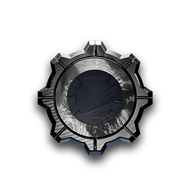





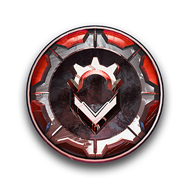
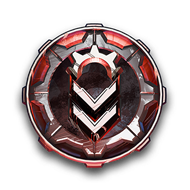
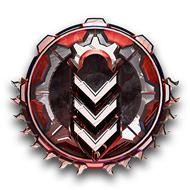





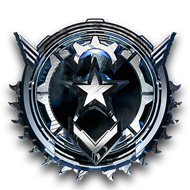



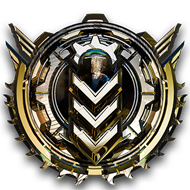









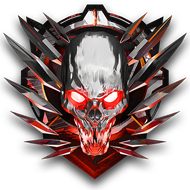

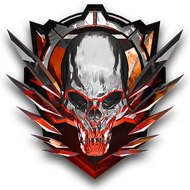
Note the uneven step counts. Bronze, Silver and Gold each run five; Onyx only runs to three; Diamond starts at zero rather than one. That the trailing number is a sub-step at all is a read of the filenames and the badge art, not something the game states.inferred
How Rank Rating moves
"Your Rank is determined by your Rank Rating, which is won and lost based on match outcome, match duration, and personal performance. You cannot lose points when you win or gain points when you lose, and the amount of points at stake scales with your Skill Division."
In-game Rank panel, verbatimTwo things that rule text does not tell you. There is a Promotion Bonus and a Demotion Penalty as discrete named values, so crossing a tier boundary is worth more than a normal result. And the "you cannot lose points on a win" line is not absolute: disconnect, rejoin and win, and you still take a small RR hit.
The post-match breakdown itemises the result. The recovered labels are Tier Modifier, Performance, Leave Penalty, MVP, Win / Lose, and a Total RR line. Curiously, match duration is named as an input in the rules but has no corresponding row.
Ranking up gets a celebration animation with its own ember effects. There is no demotion equivalent anywhere in the build. The presentation is deliberately one-sided.
No numeric values exist anywhere — no thresholds, no points per win, no per-rank floors. If you see a specific RR number quoted somewhere, it did not come from this build.
Placement matches
You get no rank until placements are done. The game says plainly: "Your rank will be determined once your placement matches have been completed."
How many? The honest answer is that the build does not say. The counter is filled in at runtime from a server value. The commonly quoted figure of five comes from the unranked badge art, which is a COG gear with five segment slots that light one at a time.inferred It is a reasonable read, but it is a read.
Quit and abandon rules
"Abandoning your team is not tolerated in Ranked.
Disconnected players may rejoin up to two times. Rejoining and finishing the match results in a minor Rank Rating penalty, but no matchmaking penalty.
Leaving by choice is final and immediately applies a loss, plus maximum Rank Rating and matchmaking penalties.
Repeated quits escalate penalties and may restrict Ranked access. Completing matches reduces penalty severity over time."
In-game "Finish What You Start" panel, verbatimThe last sentence is the half nobody quotes, and it is the useful one: penalties decay as you complete matches. A bad night does not follow you forever. There is a real distinction between a crash and a rage-quit, too — the game tracks them differently and punishes them differently.
Re-Up is a different ladder entirely
Re-Up is account progression, not Versus rank. It hangs off your Player Emblem and applies across the whole game.
"You've hit Player Level 100; now it's time to Re-Up. Choosing to Re-Up will reset your Player Level to 1 as well as grant you an exclusive customization reward. You can Re-Up a total of four times."
In-game Re-Up prompt, verbatimFour Re-Ups against 100 levels each lines up with the publicly stated 500 total levels.announced The art disagrees: the folder holds ten numbered Re-Up badges, I through X. The onboarding screen sides with the text, showing I to IV lit and a faded V. Read the ten badges as headroom, not as proof of ten Re-Ups.inferred
Social versus Ranked
Social is not just unranked ranked. It has a structural difference that matters: rolling lobbies. At the end of a Social match, players vote on the next map and mode and the lobby continues without re-queuing. No equivalent exists for Ranked.
Social also carries Player vs Bot, across five difficulty tiers: Beginner, Intermediate, Experienced, Advanced, Expert. And a loading tip in the game itself points out that many Versus challenges can be completed against bots — a shortcut The Coalition put in writing.
The four launch modes
Each mode ships a rule card in the game's own text. These are quoted exactly, bullet for bullet.
Team Deathmatch
Internal: TDM- Last team standing wins
- 15 lives per team
- 2 rounds to win the match
- 10 minute round timer
Conquest
Internal: KOTH_Conquest- Hold the zone to capture it
- Capture 4 zones to win
- Single round
- 25 minute round timer
- 3 minute timebank per zone
Demolition
Internal: DFA / ASSAULT- Obtain the bomb, plant it then defend until it goes off
- 60 second fuse
- Team-based fuses
- 6 minute round timer
- 3 rounds to win

Crucible
Internal: Gauntlet / Attrition- Hold the Core in the zone to capture it
- Capture 3 zones to win the round
- 2 rounds to win the match
- 10 minute round timer
The naming trap
If you go looking through the game's files yourself, two of these four are almost impossible to find, because the shipped names and the display names never meet:
- Demolition is DFA in its folder and ASSAULT in the engine config. Every bomb asset, stat and voice line uses "Assault".
- Crucible is Gauntlet everywhere, in a folder called Attrition, with an engine alias of CARRY. The word "Crucible" appears zero times in the asset list.
The Crucible link is not guesswork: the game's own hint text says "Dropping the Core removes a percentage of your team's progression towards the next checkpoint in Crucible", and the checkpoint system it describes is logged internally as GauntletTeamReachedCheckpoint. Same mechanic, two names.
What the rules do not say
Worth being straight about the gaps, because they get filled in with assumptions:
- Team size is never stated numerically. 4v4 is announced and the game's prose mentions "4v4 Quickplay", but no rule card gives a headcount.announced
- Respawn rules exist only for TDM and Demolition. Conquest and Crucible say nothing about respawns anywhere.
Everything else in the build
Beyond the launch four, the beta carries a lot of modes in varying states of completeness. This is what is actually there.
| Mode | Status | What is there |
|---|---|---|
| King of the Hill | Shipping-grade | Full rules, unlimited respawns, single round. The largest HUD folder in the build |
| Guardian | Shipping-grade | Leader pawns, scorefeed, announcer bank, own scoreboard config |
| Warpath | Shipping-grade | Moving zone on a looping route, new route each round. Three route maps per level |
| Demolition Hardcore | Season 1 | 30 second fuse, defusing wins the round, 4 rounds. One life per round |
| Halloween | Season 1 event | Jack-o-Cannon replaces the Core, pumpkins replace power weapons. Fully localised |
| Thanksgibbing | Season 1 event | Six mode variants: TDM, Conquest, Demolition, Crucible, Guardian, Warpath |
| Brothers to the End | Season 1 | A TDM variant with its own tuning and two scorefeed tables |
| Wingman | Prototype | Complete UI suite and four team crests, but not one line of rules text |
| Payload | Prototype | Escort an object along a path with checkpoints. No art, no text |
| Bunker | Prototype | Defend a generator with a fuel supply and a force field. No art, no text |
| Gearsmas | Code only | Tuning and a Guardian rules component. No front end at all |
| Free For All | Name only | One string and a recycled crest. No game mode class exists |



The six maps
Six launch maps: Battleship, Outpost, Market, Park, Precinct, Skyward. The 11 August patch added none.
Their internal names differ, which trips up anyone reading the files: the art uses Camp and Marche where the game displays Outpost and Market.inferred Only those two were built as playable levels in the beta — the other four have complete UI art and environment folders but no playable level, which is normal for a partial beta build and says nothing about launch.