Your badge does not decide your opponents. A hidden skill
rating does, and you never see it.
Squads matchmake on the highest rating in the group, not the
average.
Skill Divisions are letters, A to D. The metal ranks, Bronze to Diamond, are the other ladder.
Quit penalties decay as you finish matches. A bad night does
not follow you forever.
Two systems, not one
Plus Re-Up, which is not a rank
Hidden skill rating
Skill Division
This is what matchmaking uses. You never see the
number. Four divisions, and they are plain letters, not metals.
Highest
Lowest
Your Division does not limit your Rank, but it sets how
much is at stake: “the amount of points at stake scales with
your Skill Division”. The higher your hidden rating, the larger
the swing in Rank Rating (RR), the number behind your visible rank, on every result.
The panels, word for wordR1, R2
R1Word for word
“Ranked is built for competitive play, with tighter
matchmaking and strict penalties for leaving early.
Matchmaking is based on your (hidden) skill rating for that
playlist. Squads matchmake based on the highest skill rating in
the group.
After completing your placement matches, you’ll be assigned
a Skill Division and Rank.”
Source. The in-game ranked onboarding panel, quoted
in full.
Two consequences. Your badge does not affect
who you play against, so a low rank with a high hidden rating
still gets hard games. And squads matchmake on the highest
skill rating in the group, not the average. Taking a much
weaker friend into ranked pulls them up into your bracket rather
than pulling you down into theirs. These ratings are kept per
playlist (each mode’s queue): your rating in one mode says
nothing about another.
R2Word for word
“Your skill rating puts you into one of four Skill
Divisions, and represents how good you are right now relative to
the other players in that playlist.
Skill Divisions:
• Division A (Highest)
• Division B
• Division C
• Division D (Lowest)”
Source. The in-game Skill Division panel, quoted in
full.Figure 1. The letter is the whole ladder: no
metal, no sub-step, no number attached.
Your division may not be fully hidden. The
game has a display for your own division and another for the
lobby’s, which suggests you can see roughly how it rates
the room you are in.
Our reading
Rank Rating
The visible ladder
Sets your Rank, the badge on your card. Matchmaking
ignores it completely. Bronze, Silver and Gold each run five steps.
Onyx runs three. Diamond starts at zero rather than one.
UnrankedPlacement
Bronze5 steps
Silver5 steps
Gold5 steps
Onyx3 steps
Diamond4 steps, from zero
Masters—
The rank list the game shows stops at Diamond:
Bronze, Silver, Gold, Onyx, Diamond. The Unranked badge is a COG gear
that lights five segments during placement. The number on a
badge looks like a step within a rank. The game does not say.
Our reading
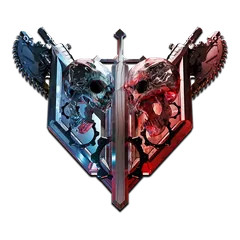
Masters, and what is unannouncedArt only
The game contains finished art for a Masters
tier in three designs: a chrome skull with red eyes on a spiked
shield. No text in the game names it, and the rank list
stops at Diamond. It is the clearest sign of a tier above Diamond
that is not switched on yet, so no step count is given.
Account progression
Re-Up
A separate system, not a Versus rank. It is tied to
your Player Emblem and applies across the whole game.
Four Re-Ups at 100 levels each matches the publicly
stated 500 total levels.
Announced
The art disagrees: there are ten numbered Re-Up badges, I
through X. The onboarding screen agrees with the text, showing I to IV
lit and a faded V. The extra badges may be room to grow.
Our reading
The prompt, word for wordR5
R5Word for word
“You’ve hit Player Level 100; now it’s time to
Re-Up. Choosing to Re-Up will reset your Player Level to 1 as well
as grant you an exclusive customization reward. You can Re-Up a
total of four times.”
Source. The in-game Re-Up prompt, quoted in
full.
Not a rank. The Soldier Rank
chevrons you may have seen are Horde Siege class progression. The
game calls it your “Soldier Level”. Different system,
different screen. The four classes are broken down on the
classes page.
How Rank Rating (RR) moves
The game gives no RR numbers
Factor
What the game says
Match outcome
RR is “won and lost based on match outcome, match
duration, and personal performance”. You cannot lose points
when you win or gain points when you lose.
Match duration
Named as an input in the rules, but it gets no row of
its own in the post-match breakdown.
Skill Division
“The amount of points at stake scales with your
Skill Division.” The higher your hidden rating, the larger
the swing on every result.
Tier boundary
The game has a Promotion Bonus and a
Demotion Penalty, so moving up or down a rank is worth more
than a normal result.
Rejoin after a disconnect
“You cannot lose points on a win” is
not absolute: disconnect, rejoin and win, and you still
take a small RR hit.
The breakdown
The post-match screen itemizes Tier Modifier,
Performance, Leave Penalty, MVP, Win /
Lose, and a Total RR line.
Ranking up
A celebration animation plays.
Ranking down has no equivalent.
Thresholds
— No RR figures are
published anywhere: no thresholds, no points per win, no per-rank
floors. If you see a specific RR number quoted, it did not come
from the game.
The Rank panel, word for wordR3
R3Word for word
“Your Rank is determined by your Rank Rating, which is won
and lost based on match outcome, match duration, and personal
performance. You cannot lose points when you win or gain points
when you lose, and the amount of points at stake scales with your
Skill Division.”
Source. The in-game Rank panel, quoted in
full.
Placement matches
No rank until placements are done
“Your rank will be determined once your
placement matches have been completed.”
How many? The game does not say. The counter
fills in as you play. The usual figure of five comes from the
Unranked badge, a COG gear with five segments that light one at a
time. Our reading
Probably right, but the game does not state it.
Finish What You Start
Quit penalties decay
R4Word for word
“Abandoning your team is not tolerated in Ranked.
Disconnected players may rejoin up to two times. Rejoining and
finishing the match results in a minor Rank Rating penalty, but no
matchmaking penalty.
Leaving by choice is final and immediately applies a loss, plus
maximum Rank Rating and matchmaking penalties.
Repeated quits escalate penalties and may restrict Ranked access.
Completing matches reduces penalty severity over time.”
Source. The in-game “Finish What You
Start” panel, quoted in full.
The useful part is the last sentence:
penalties decay as you complete matches. The game also treats
a crash differently from leaving by choice.
Four modes ship at launch and three more rotate in. Every
line is quoted from the rules card in the game. A dash means the card
gives no figure, not zero.
The seven mode cards7 modes
Team DeathmatchLaunch mode
Last team standing wins. 15 lives per team.
Rounds
2 to win
Round timer
10 min
ConquestLaunch mode
Hold the zone to capture it. Capture 4 zones to win. The game has an Overtime state for this mode, but what triggers it is unknown.
Rounds
Single
Round timer
25 min
DemolitionLaunch mode
Obtain the bomb, plant it, then defend until it goes off. 60 second fuse.
Rounds
3 to win
Round timer
6 min
Blast damage
1,000
Blast radius
1,000 units
CrucibleLaunch mode
Hold the Core in the zone to capture it. Capture 3 zones to win the round.
Rounds
2 to win
Round timer
10 min
King of the HillRotation
Two teams hold the zone for a cumulated 120 seconds to win the match. The game has an Overtime state for this mode, but what triggers it is unknown.
Rounds
Single
Round timer
—
GuardianRotation
Last team standing wins the round.
Rounds
2 to win
Round timer
10 min
WarpathRotation
Capture the zone to gain points. 100 points to win the round. The game has an Overtime state for this mode, but what triggers it is unknown.
Rounds
2 to win
Round timer
10 min
All seven cards, word for word7 modes
Mode
Rounds
Round timer
The card, word for word
Team Deathmatch
2 to win
10 min
Last team standing wins. 15 lives per team. When a team runs out of lives it gets one more chance before death is final, and a zone spawns. Capture it or wipe the enemy to win.
Conquest
Single
25 min
Hold the zone to capture it. Capture 4 zones to win. Each zone has a 3 minute timebank that drains while it sits unoccupied; if it hits zero the match ends in a draw. Nothing else in Versus works that way.
Demolition
3 to win
6 min
Obtain the bomb, plant it, then defend until it goes off. 60 second fuse, and fuses are team-based. Once your team plants you stop respawning; if nobody detonates, the lowest remaining fuse time decides the round.
Crucible
2 to win
10 min
Hold the Core in the zone to capture it. Capture 3 zones to win the round. Each team has its own set of zones and they move independently, and dropping the Core voluntarily costs you capture progress.
King of the Hill
Single
—
Two teams hold the zone for a cumulated 120 seconds to win the match. The zone is only available for a short time before it moves somewhere else. Unlimited respawns. The card gives no round timer; every other mode does.
Guardian
2 to win
10 min
Last team standing wins the round. The leader mechanic Guardian has carried in earlier Gears games is not stated anywhere here.
Warpath
2 to win
10 min
Capture the zone to gain points. 100 points to win the round.
What the rule cards don’t say3 gaps, 1 correction
Respawn rules exist only for Team Deathmatch and
Demolition. Conquest and Crucible say nothing about respawns at
all.
King of the Hill has no stated round timer. Every other
mode gives one.
Guardian’s leader mechanic is not written down. It may
well work the way it always has. The card does not say it, so neither
does this page.
Correction
If you have seen DFA or Attrition listed as
unannounced E-Day modes, they are not modes. They are Demolition and
Crucible under older working names, and the Attrition label is
not the returning Gears 5 mode of that name.
Social versus RankedRolling lobbies, bots, 4v4
Social, the unranked option, has rolling
lobbies: “at the end of each match, players vote on the next
map and mode, allowing lobbies to continue without re-entering
matchmaking.” Ranked has no equivalent.
Social also has Player
vs Bot. Its five difficulty tiers are Beginner, Intermediate,
Experienced, Advanced, Expert. A loading tip in the game says
many Versus challenges can be completed against bots.
No rule card gives a team
size. The playlist descriptions say 4v4.
Announced
Six launch maps: Battleship, Outpost, Market, Park,
Precinct, Skyward. The August 11 update added none. The
maps page covers each one callout by callout. Bots
that fill empty slots have five difficulty tiers of their own; see
what each tier changes on the Versus page.
Anything published here and later withdrawn is listed on
standards and corrections.


 Highest

 Lowest
 Unranked
 Bronze
 Silver
 Gold
Gold Onyx
Onyx Diamond
 Masters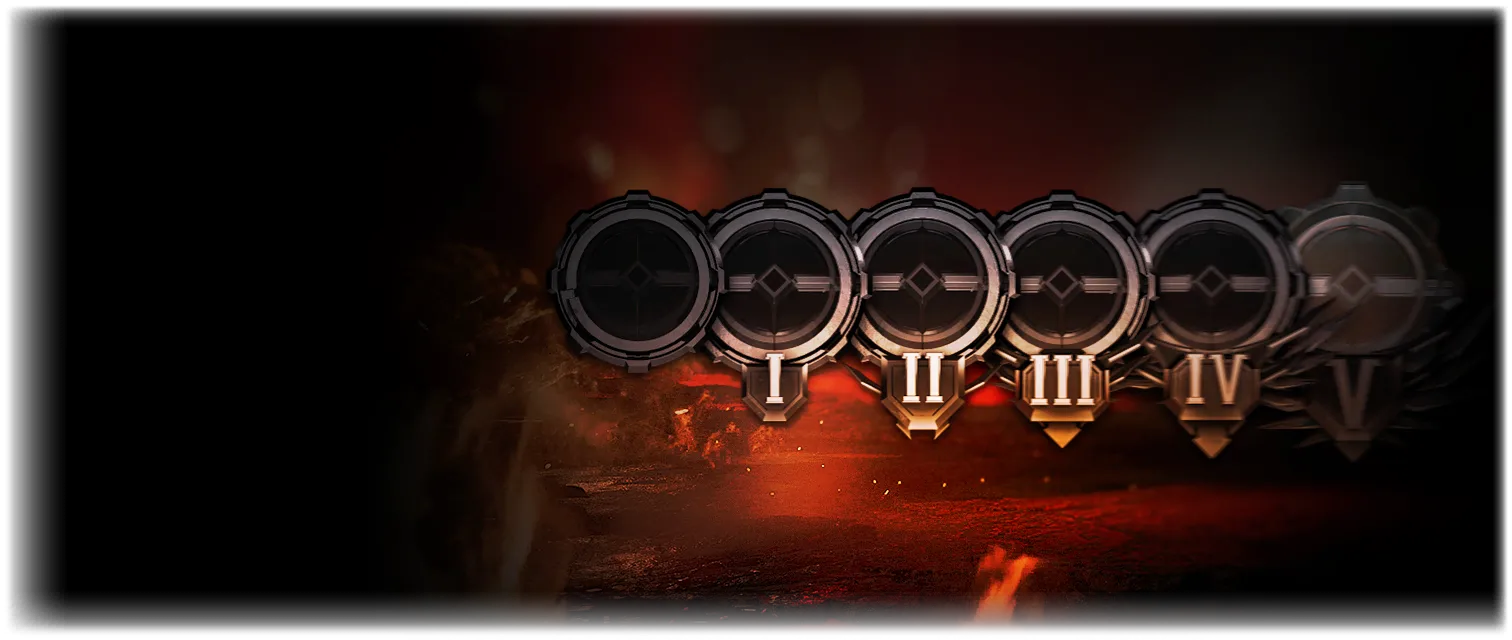


Social versus RankedRolling lobbies, bots, 4v4
Social, the unranked option, has rolling lobbies: “at the end of each match, players vote on the next map and mode, allowing lobbies to continue without re-entering matchmaking.” Ranked has no equivalent.
Social also has Player vs Bot. Its five difficulty tiers are Beginner, Intermediate, Experienced, Advanced, Expert. A loading tip in the game says many Versus challenges can be completed against bots.
No rule card gives a team size. The playlist descriptions say 4v4. Announced