


Team Deathmatch
Launch mode
Last team standing wins. 15 lives per team.
- Rounds
- 2 to win
- Round timer
- 10 min
Last team standing wins. 15 lives per team.

Hold the zone to capture it. Capture 4 zones to win. The game has an Overtime state for this mode, but what triggers it is unknown.

Obtain the bomb, plant it, then defend until it goes off. 60 second fuse.

Hold the Core in the zone to capture it. Capture 3 zones to win the round.

Two teams hold the zone for a cumulated 120 seconds to win the match. The game has an Overtime state for this mode, but what triggers it is unknown.

Last team standing wins the round.
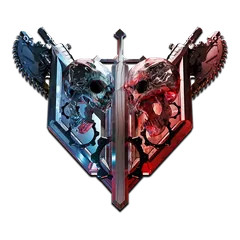
Capture the zone to gain points. 100 points to win the round. The game has an Overtime state for this mode, but what triggers it is unknown.
| Mode | Rounds | Round timer | Figure on the card | The card, word for word |
|---|---|---|---|---|
| Team Deathmatch | 2 to win | 10 min | 15 lives per team | Last team standing wins. 15 lives per team. When a team runs out of lives it gets one more chance before death is final, and a zone spawns. Capture it or wipe the enemy to win. |
| Conquest | Single | 25 min | 4 zones · 3 min timebank per zone | Hold the zone to capture it. Capture 4 zones to win. Each zone has a 3 minute timebank that drains while it sits unoccupied; if it hits zero the match ends in a draw. Nothing else in Versus works that way. |
| Demolition | 3 to win | 6 min | 60 second fuse | Obtain the bomb, plant it, then defend until it goes off. 60 second fuse, and fuses are team-based. Once your team plants you stop respawning; if nobody detonates, the lowest remaining fuse time decides the round. |
| Crucible | 2 to win | 10 min | 3 zones | Hold the Core in the zone to capture it. Capture 3 zones to win the round. Each team has its own set of zones and they move independently, and dropping the Core voluntarily costs you capture progress. |
| King of the Hill | Single | — | 120 seconds, cumulated | Two teams hold the zone for a cumulated 120 seconds to win the match. The zone is only available for a short time before it moves somewhere else. Unlimited respawns. |
| Guardian | 2 to win | 10 min | — | Last team standing wins the round. The leader mechanic Guardian has carried in earlier Gears games is not stated anywhere here. |
| Warpath | 2 to win | 10 min | 100 points | Capture the zone to gain points. 100 points to win the round. |
What the rule cards do not say
Respawn rules exist only for Team Deathmatch and Demolition. King of the Hill has no stated round timer. Guardian’s leader mechanic is not written down, so neither is it here. No mode’s own rule card carries a headcount, but The Coalition has said it directly: “All of our Versus modes are 4 v 4,” from the official multiplayer deep dive.
Correction
DFA and Attrition are not modes. They are Demolition and Crucible under older working names.
Hidden skill rating
Puts you in a Skill Division. Matchmaking uses it. You never see the number.
Skill Divisions
4A highest, D lowest
Rank Rating
Sets your Rank: the badge on your card. Matchmaking ignores it completely.
Named ranks
5Bronze to Diamond
Per playlist
Each playlist (mode queue) keeps its own hidden rating, Skill Division and Rank Rating. Your rating in one mode says nothing about another.
Squads matchmake on the highest skill rating in the group, not the average. The points at stake on every result scale with your Skill Division.
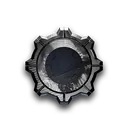 UnrankedPlacement
 Bronze5 steps
 Silver5 steps
 Gold5 steps
 Onyx3 steps
 Diamond4 steps, from zero
 Masters—
Steps are the numbered levels inside a rank, read from the badge art. The rank list in the game ends at Diamond. The Unranked badge is a gear that lights five segments during placement. Masters has finished art in three designs, but the game gives it no name or step count.
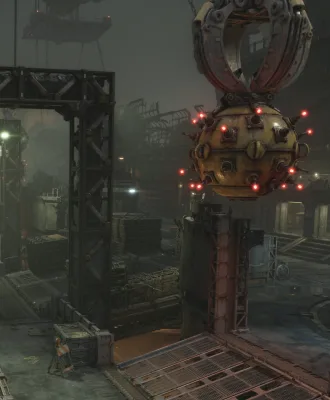 Battleship3 pieces of art
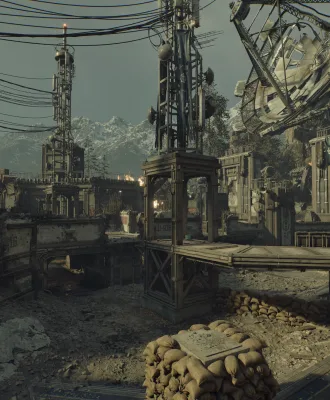 OutpostCalled Camp in the art
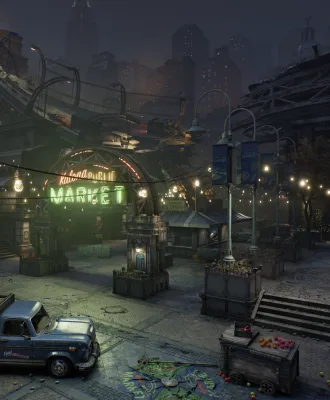 MarketCalled Marche in the art
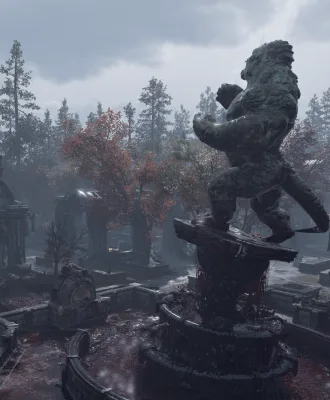 Park3 pieces of art
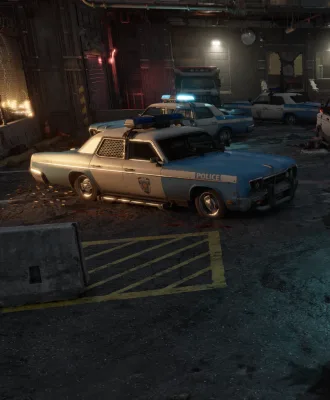 Precinct3 pieces of art
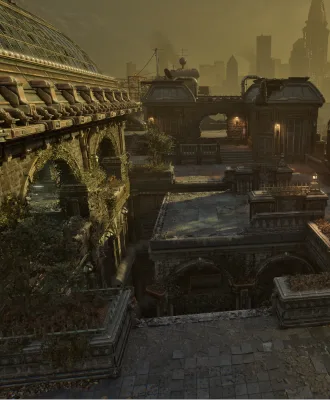 Skyward3 pieces of art
No map descriptions
The game has finished art for all six maps and no text about how any of them plays. Each map page adds callout names and marker positions from the level data. All ten maps, for Versus and Horde Siege.
Bots can fill empty slots in Versus. The game sets their skill on five tiers: Beginner, Intermediate, Experienced, Advanced and Expert. None of this, including the tier names, is published.
| Bot tier | Moving-target accuracy | Perfect-reload chance | Burst-size multiplier | Melee cooldown | Power weapons allowed |
|---|---|---|---|---|---|
| Beginner | — | — | 0.60× | None | 4 |
| Intermediate | 0.25× | 20% | 0.70× | 6.5s | 14 |
| Experienced | 0.50× | 50% | 0.80× | 5s | 19 |
| Advanced | 0.85× | 70% | — | 3.5s | 19 |
| Expert | — | 85% | — | 2s | 19 |
The tiers are listed from easiest to hardest, which is not the order the names suggest: “Experienced” bots are easier than “Advanced” ones. The order comes from the numbers (reload luck, aim accuracy, melee speed and power-weapon access all rise in this order), not from documentation. Beginner’s melee cooldown is −1 in the game data, most likely meaning “does not melee”, so it shows as None. About 20 more AI settings (grenade access, evade reactions, revive behavior, covering fire) also scale across the five tiers and are not shown here.