

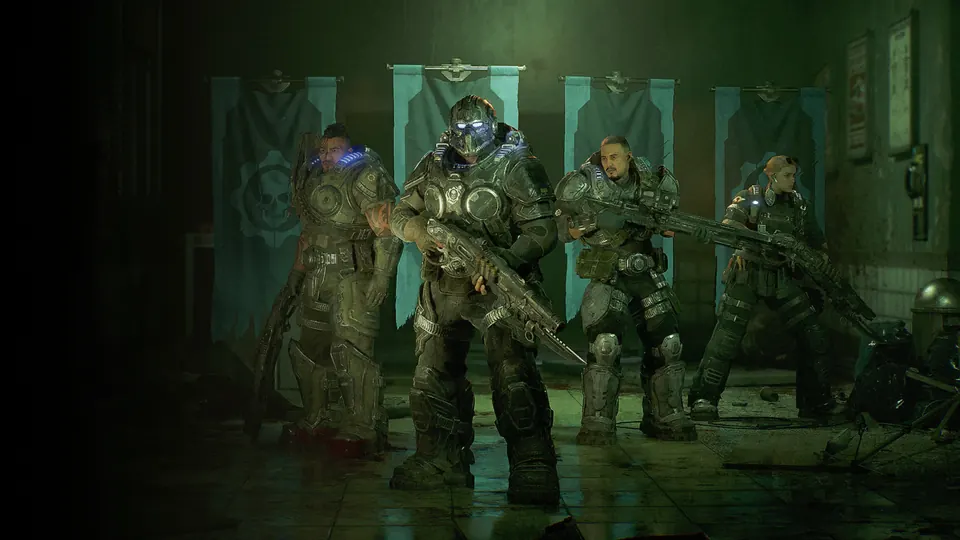
Put a hundred hours into Gears 5 Horde and your first Horde Siege match feels familiar for about ninety seconds. Same cover, same chainsaw, same sinking feeling when a Boomshot lands behind you. Then you go to spend a level-up, and there are no skill cards to spend it on. It is not Horde any more.
Skill cards are gone. Weapon mods replaced them
Everything else hangs off this. Gears 5 gave you a deck. Level a character, earn cards, slot five of them, and your build lived there for the rest of the match. Two Kaits could play completely differently.
E-Day moves all of it onto the gun. Mods belong to weapons rather than classes, and both the mods and the slots they go in are bought with Weapon Parts, earned on secondary (side) objectives and kept only if your squad finishes the mission. How many Parts a mission pays is on Siege rewards. There are 176 weapon mods across twelve weapons in eight families: barrels, magazines, stocks, scopes, bodies, fire modes, Perfect Reload mods, and a catch-all of smaller parts.
So a build lives on the gun and travels with it. That cuts both ways. It kills the Gears 5 problem where five card slots decided the match before it started, and it introduces a new one where a bad weapon draw flattens a run.
Which mods are worth the Parts is in the weapon mods article. The full list is the mod index.
Every mod offered for a weapon works on that weapon. There is no such thing as a mod that does nothing on the gun it is offered for.
The class is the identity now
Gears 5 gave you characters with ultimates and card pools. E-Day gives you four classes, and each one owns a piece of gear no other class can touch.
One gadget each
Each class carries one gadget no other class gets. It is the largest single difference between two players in the same squad.
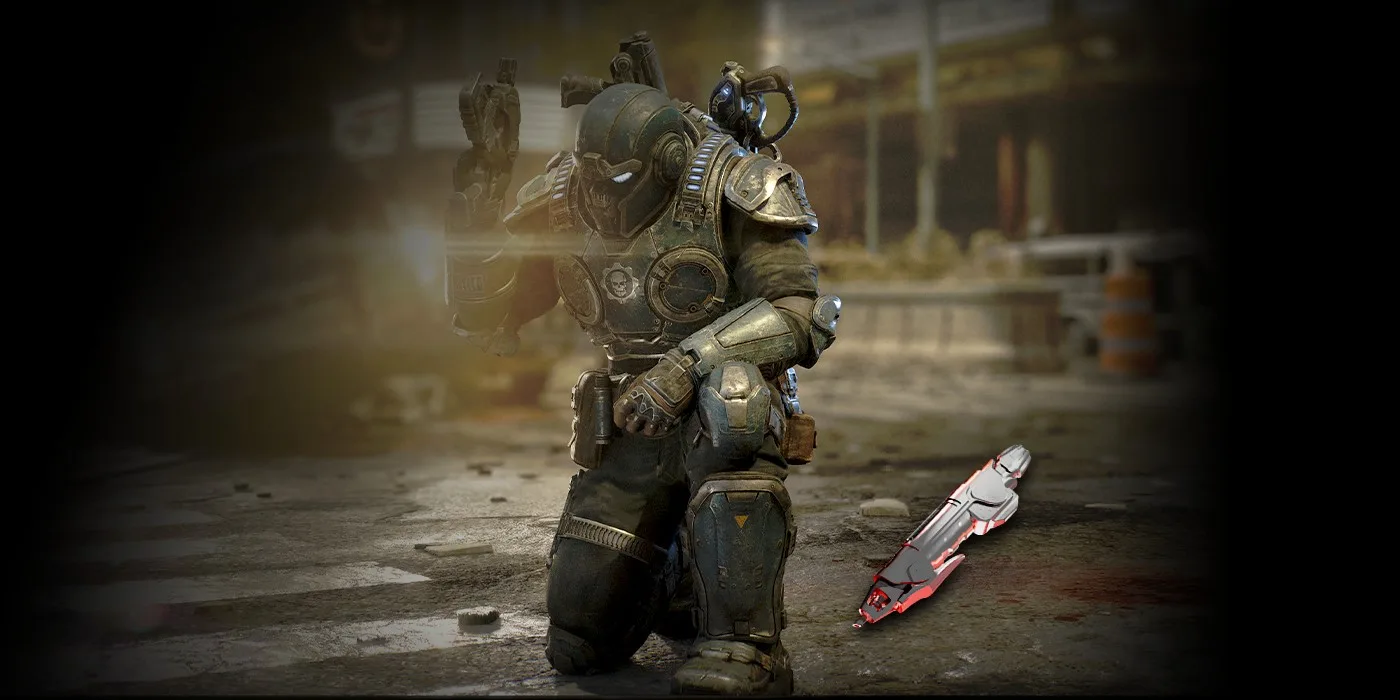
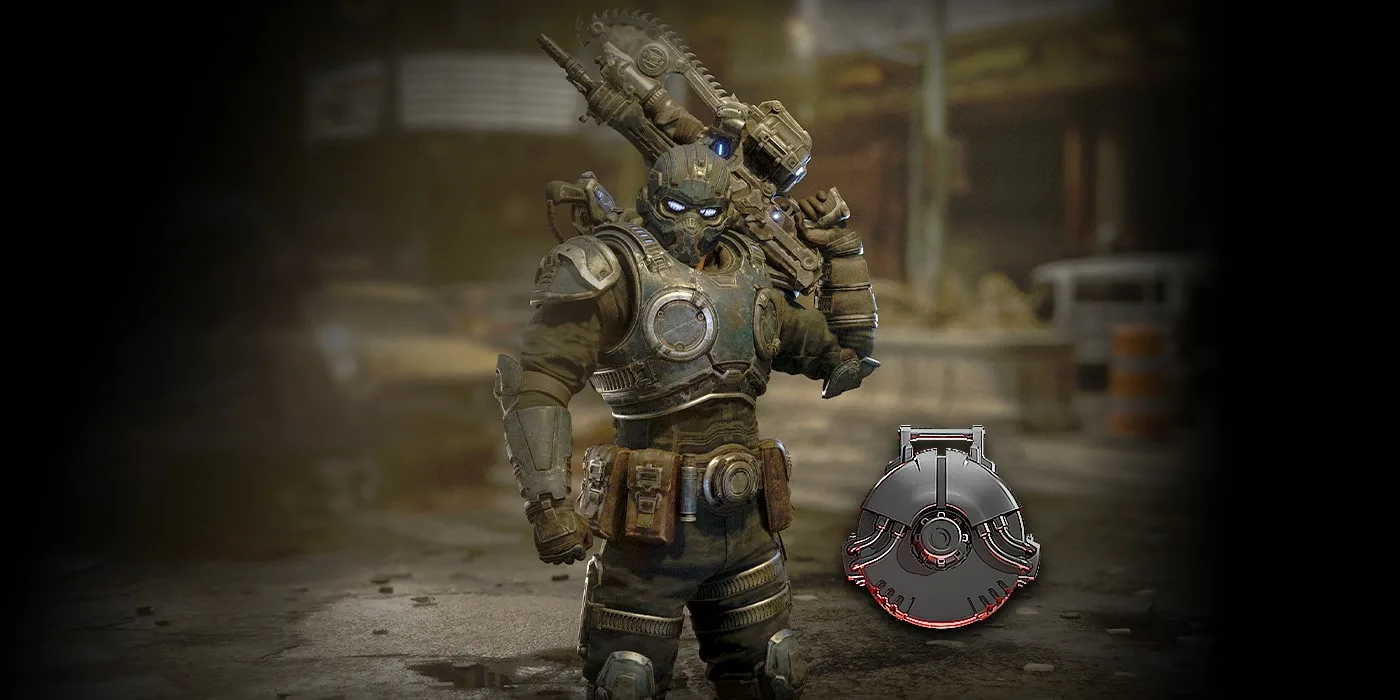
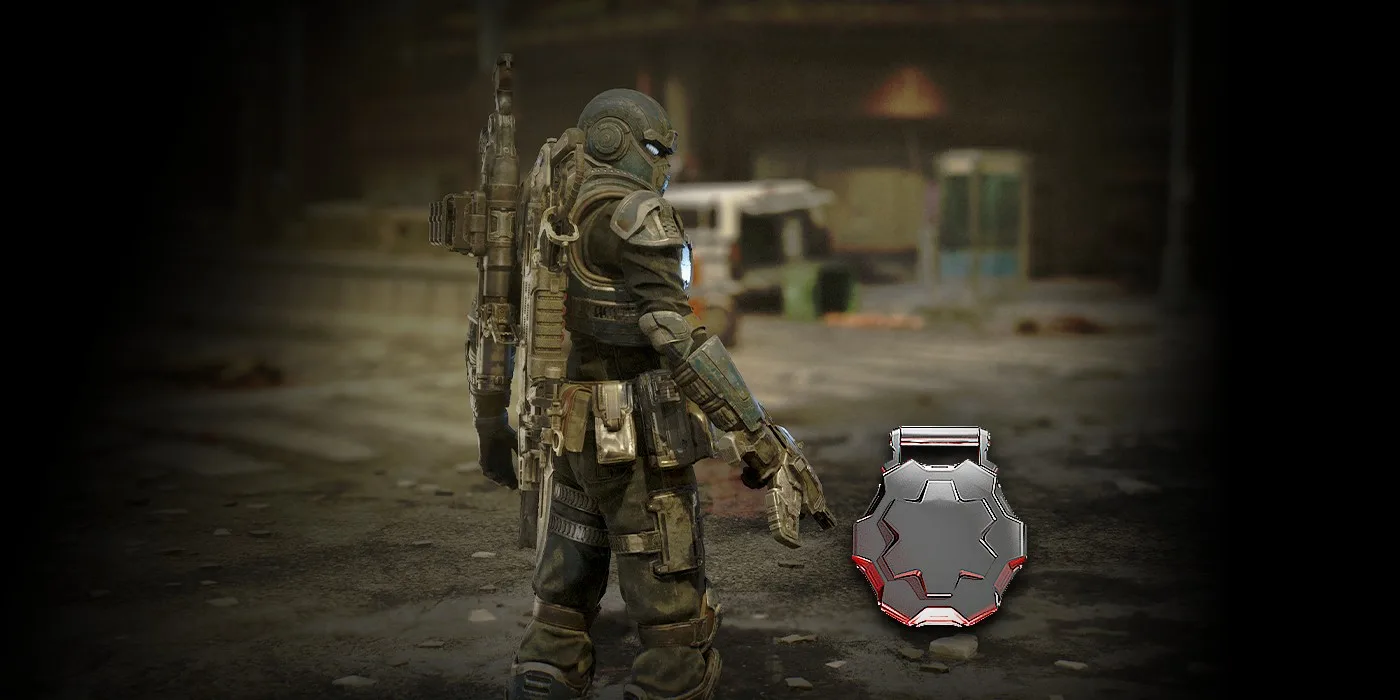
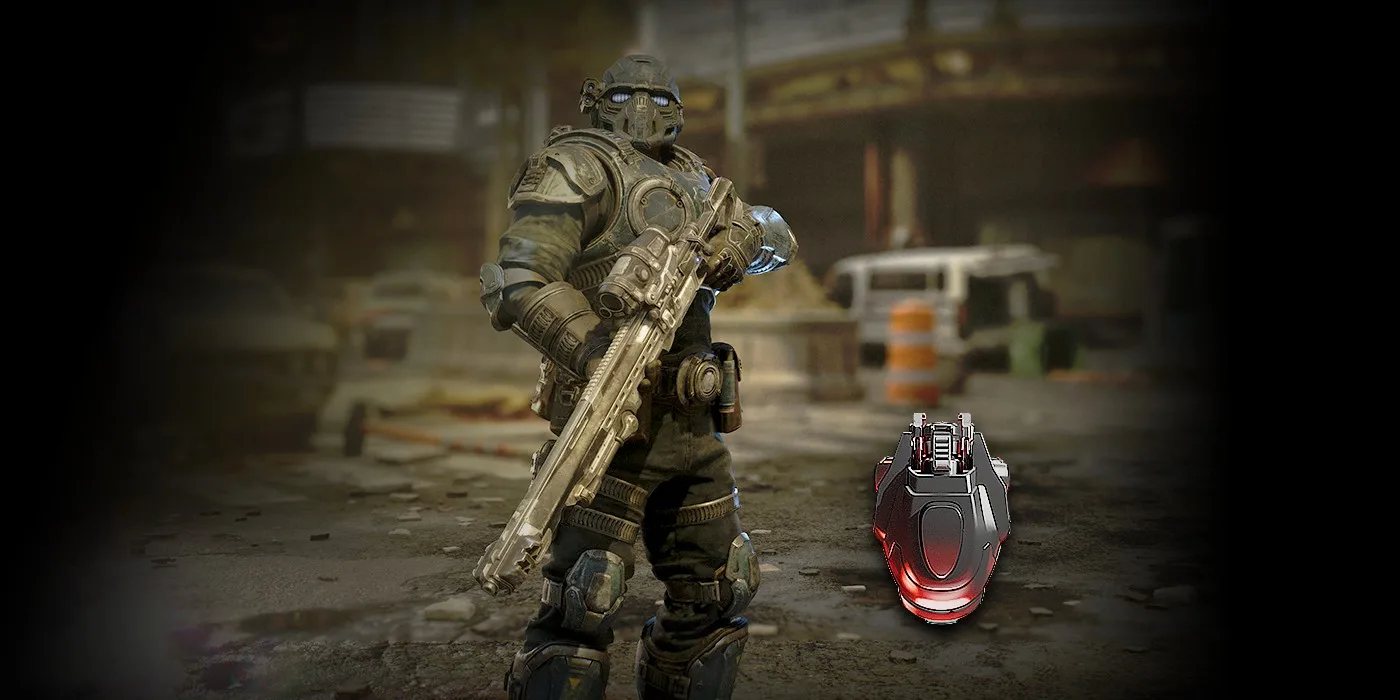
The Breacher pushes to point-blank range and uses the Injector to refill health and apply Adrenaline, which cuts damage taken and raises damage dealt. The Assault fights from cover and uses the Sonic Disruptor to stun, break a line and open executions. The Medic works the middle of the fight and uses the Stim Vaporizer to heal and revive. The Marksman sits at the back and uses the Pulse Drone to reveal enemies for the whole squad.
Each class runs to level 30 with four rank promotions along the way. The Breacher’s are Brawler, Striker, Vanguard and Juggernaut. Levels feed three stat tracks the game shows as pips. The game never says what a pip is worth, so neither does this page. It is a flatter progression than a Gears 5 card deck, deliberately: you are building a loadout over a match, not a character over a season.
The Medic problem
Deploying Stim revives every downed squadmate. Not the closest one, not one at a time. It is the strongest recovery effect in the mode and it has no counterweight.
That is why Medic tops the class ranking, and it is not close. The full order, and the argument for each position, is in every Horde Siege class ranked.
Higher difficulty makes you worse at the game
In the campaign, difficulty does not give enemies more health. It changes your numbers instead. Your health and your damage output both come down as the difficulty goes up: Casual gives you double health and 1.85× damage, Inconceivable gives you 0.40× and 0.66×. A Drone is the same Drone on both.
That reframes the hard settings. Stacking damage mods is not you chasing an enemy health pool that keeps moving away. It is you clawing back a penalty applied to your own numbers. The full table is on difficulty explained.
Horde Siege runs four difficulty levels, easiest to hardest: Rookie, Infantry, Commander, Allfather. It is a different system, not the campaign one renamed, though the two modes share more than their difficulty levels suggest. Its difficulty levels pull from a pool of match modifiers, and plenty of those are about the enemy: Enemy Health Regeneration, Bosses Increased Health, Reavers Increased Health, Large Locusts Damage Increase. What is certain is that a promotion raises class stats at Allfather.
A player starts with 1,000 health in Horde Siege, the same 250-plus-750 base the class builder’s character sheet runs on, before the class rank and difficulty multipliers. That figure is a player’s, never an enemy’s. The kill-time figures on this site do not use it. They divide a weapon’s damage into the 1,500 health of a Versus player, as one common benchmark for comparing weapons rather than an exact Horde count. Enemy health is on the enemy pages. The weapon-by-weapon version is the weapon database.
Waves carry objectives now
Gears 5 Horde was fifty waves and a Fabricator (the machine that built your defenses). Horde Siege runs objectives inside its waves: hunting a High Value Target, collecting COG Intel, activating and then defending a R.I.G. at a named location. You are not holding a base, you are being moved around one.
It is the best change in the mode. Gears 5 Horde had a well-documented late-game pattern where a good team sat behind a wall of sentries and the difficulty stopped mattering. Pulling you out of the fortification is the right instinct.
So is it better?
It is more direct. Gears 5 Horde let a stacked deck carry a bad player for fifty waves. Horde Siege puts the build in the match, ties the class to a job, and stops pretending difficulty is about the enemy.
Whether it lasts is the open question. A mode that is excellent for a weekend is not automatically a mode people are still playing in February, and what E-Day gives you at max level looks thin.